
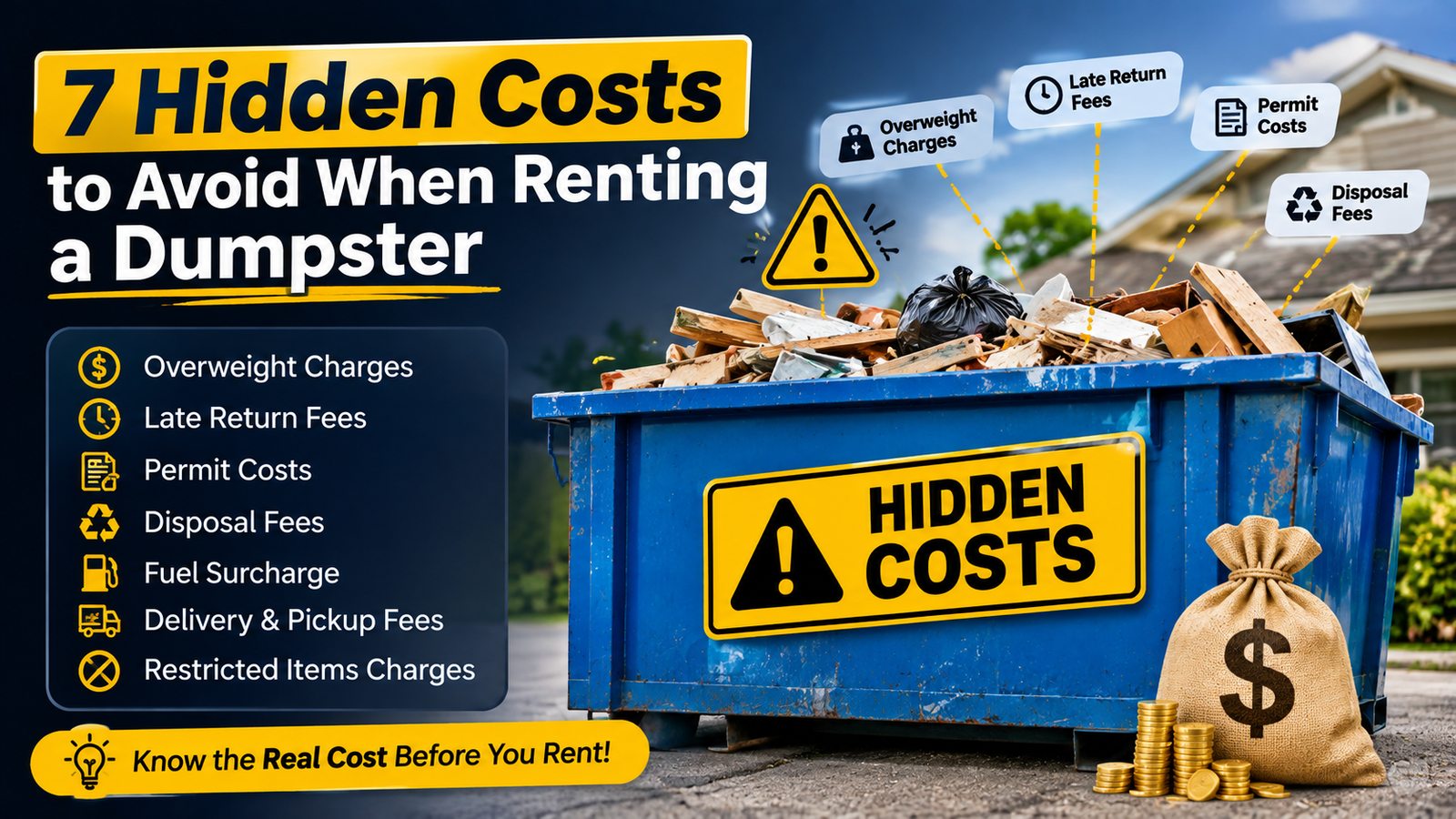
The price you see when you request a dumpster isn’t always the price you pay. Weight overages, extra rental days, permit rules, and restricted materials can all change your final bill. The good news: every one of these costs is avoidable once you know what to ask before you book.
At Amen Dumpster & Junk Removal, we quote MD, VA, and DC customers every day, and the same questions come up again and again. Here’s exactly where hidden dumpster rental fees come from and how to make sure your quote is the number you actually pay.
What Does a Dumpster Rental Price Usually Include?
A standard quote should cover five things: the dumpster itself, delivery, pickup, a set rental period, and a set weight allowance for disposal.
What’s included varies a lot by company. Some rental companies quote a bare-bones number and add delivery, pickup, or disposal as separate line items later. Others build everything into one flat rate.
At Amen, every dumpster size comes with a set weight allowance and a 7-day rental period built into one upfront price. For example, our 10-yard dumpster is $439 and includes 1.5 tons of debris. There’s no guessing what’s included, because it’s listed before you book.
7 Hidden Costs to Watch for When Renting a Dumpster
1. Weight Overage Fees
Dumpster rental overage fees are the most common surprise charge in the industry. Every dumpster size comes with a weight allowance, and going over it costs extra, even if the dumpster still looks half-empty.
This catches people off guard because weight and volume aren’t the same thing. A dumpster can hit its weight limit long before it’s visually full if it’s loaded with heavy debris like the following:
- Concrete
- Brick
- Dirt or soil
- Tile
- Roofing shingles
How to avoid it: Tell the rental company what type of debris you’re disposing of before you book, not after. Heavy materials often need a bigger dumpster or a specialized heavy-debris container, not just a bigger budget for overage fees.
At Amen, extra weight is billed at a flat $120 per additional tonne, and we tell you that number before delivery, not after pickup.
2. Extra Rental Days
Dumpster rental extension fees show up when a project runs longer than planned. Most companies include a set rental period, often 7 to 14 days, and charge a daily rate for every day beyond that.
Renovation delays, weather, and slower-than-expected cleanouts are the usual culprits. A project that was supposed to wrap up in a week can easily stretch into two.
How to avoid it: Ask how many rental days are included before you book, and be realistic about your timeline. If there’s any chance your project could run long, ask about extending the rental in advance instead of assuming you’ll deal with it later.
3. Delivery or Pickup Charges
Dumpster delivery fees often come from access problems rather than distance. A driver who can’t safely place or retrieve the dumpster may charge a trip fee, even if the truck showed up on time.
Common causes include:
- A blocked or narrow driveway
- Cars parked in the delivery spot
- Overhead obstructions like low wires or tree branches
- A dumpster loaded too full to transport safely
How to avoid it: Clear the delivery area before your scheduled date and measure your driveway or placement spot ahead of time. If you’re not sure a dumpster will fit, ask the company to confirm before delivery, not after a failed attempt.
4. Permit Fees
Dumpster permit fees apply when a dumpster sits on public property instead of private land. If the container is fully on your driveway or another part of your own property, most areas don’t require a permit at all.
Placement on a street, sidewalk, or other public space is a different story. In Washington, DC, DDOT requires a public-space permit through its online TOPS system for any dumpster placed in the public right-of-way, and permit fees typically fall in the $50–$150 range. Skipping this step isn’t a small risk either; unpermitted placement can bring fines starting around $300 per day.
Maryland and Virginia handle this at the county level rather than one statewide rule. Montgomery County, Fairfax County, and Arlington County each have their own process for street-placement permits, so the right office depends on exactly where the dumpster goes.
How to avoid it: Ask your rental company whether your placement location will need a permit and, if so, who applies for it. Some companies apply on your behalf; others expect the customer to handle it. Get this settled before delivery day, not during it.
5. Prohibited or Restricted Materials
Prohibited item fees happen when a dumpster ends up with materials the landfill or disposal facility won’t accept. Rules vary by provider and by disposal site, so it’s worth confirming rather than assuming.
Items that commonly require special handling include:
- Paint and chemicals
- Batteries
- Electronics
- Refrigerant-containing appliances
- Tires
- Mattresses (accepted by some providers, restricted by others)
How to avoid it: Ask for a clear list of accepted and prohibited materials before you start loading. If you’re not sure whether something is allowed, ask first. It’s a lot cheaper than a surprise fee after pickup.
6. Overfilled Dumpster Charges
Overfilled dumpster fees apply when debris rises above the container’s fill line. This isn’t just a pricing rule; an overfilled dumpster can be unsafe to transport on the road.
Overfilling usually happens when a project produces more debris than expected or when bulky items are tossed in without being broken down first.
How to avoid it: Break down large or bulky items before loading, and keep debris level with or below the fill line. If you’re getting close to full and the project isn’t done, it’s cheaper to ask about a second dumpster or an upgrade than to risk an overfill charge.
7. Special Disposal Charges
Dumpster disposal fees for certain materials go beyond standard trash rates. Some debris types, such as mattresses, appliances, or specific construction materials, require separate handling or a different disposal facility than everyday household waste.
These charges aren’t a trick; they reflect real differences in how materials have to be processed. But they should still be disclosed upfront.
How to avoid it: If your project includes anything outside typical household junk, mention it when you request your quote. A good rental company will tell you about any special disposal costs before the dumpster ever arrives.
How to Avoid Hidden Dumpster Rental Fees
A few minutes of asking the right questions before you book can save you from most surprise charges.
Ask for an itemized quote. A trustworthy quote breaks down the dumpster, delivery, pickup, weight allowance, and rental period so you know exactly what you’re paying for.
Confirm the included weight. Match the weight allowance to your debris type before booking, especially for heavy materials like concrete or roofing.
Ask how many rental days are included. Know the cutoff date and the daily rate for extra days in advance.
Confirm accepted and prohibited materials. Get a straight answer before loading starts, not after.
Choose the right dumpster size. Undersizing leads to overage and overfill fees; oversizing means paying for space you don’t use.
Prepare the delivery area. Clear obstacles and confirm access to avoid failed delivery or pickup charges.
Ask about permit requirements. If any part of the dumpster will sit on a street, sidewalk, or other public space, confirm who is responsible for the permit before delivery day.
Frequently Asked Questions
What are the hidden costs of renting a dumpster?
The most common ones are weight overage fees, extra rental day charges, delivery or pickup fees for access problems, permit fees for public-space placement, prohibited item fees, overfilled dumpster charges, and special disposal fees for certain materials.
Do dumpster rentals charge for extra weight?
Yes. Most rentals include a set weight allowance, and going over it means paying a per-ton overage fee. Rates vary by provider, so ask for the exact number before booking.
What happens if I exceed the dumpster weight limit?
You’ll typically be billed for the extra tonnage at the company’s overage rate. Confirming your debris type ahead of time helps you pick a size that avoids this.
Do dumpster companies charge for extra rental days?
Most do. Rentals usually include a set period, often around 7 days, with a daily fee for any time beyond that.
Do I need a permit for a dumpster?
Only if it’s placed somewhere other than fully on private property. Dumpsters on a driveway usually don’t need one; dumpsters on a street, sidewalk, or other public space usually do, with rules and fees set by the local city or county.
Can I be charged for prohibited items?
Yes, if restricted materials like chemicals, batteries, or certain appliances end up in the dumpster. Confirming the accepted materials list beforehand prevents this.
Does dumpster rental include delivery and pickup?
It should, but always confirm it. Some companies build it into the base price; others charge separately, especially if the location is hard to access.
What happens if my dumpster is overfilled?
Debris above the fill line can trigger an extra fee and may not be safe to transport. Keeping the load level with the top of the container avoids this.
Get an Upfront Quote With No Surprises
Amen Dumpster & Junk Removal builds delivery, pickup, and a set weight allowance into every price upfront, so there’s nothing to guess at later. We serve homeowners, contractors, and businesses across Maryland, Virginia, and Washington, DC, with same-day scheduling.
Not sure which size you need? Check our dumpster sizes guide or book online, and we’ll help you match the right container to your project. Prefer to skip the loading entirely? Our junk removal team can handle it for you.