
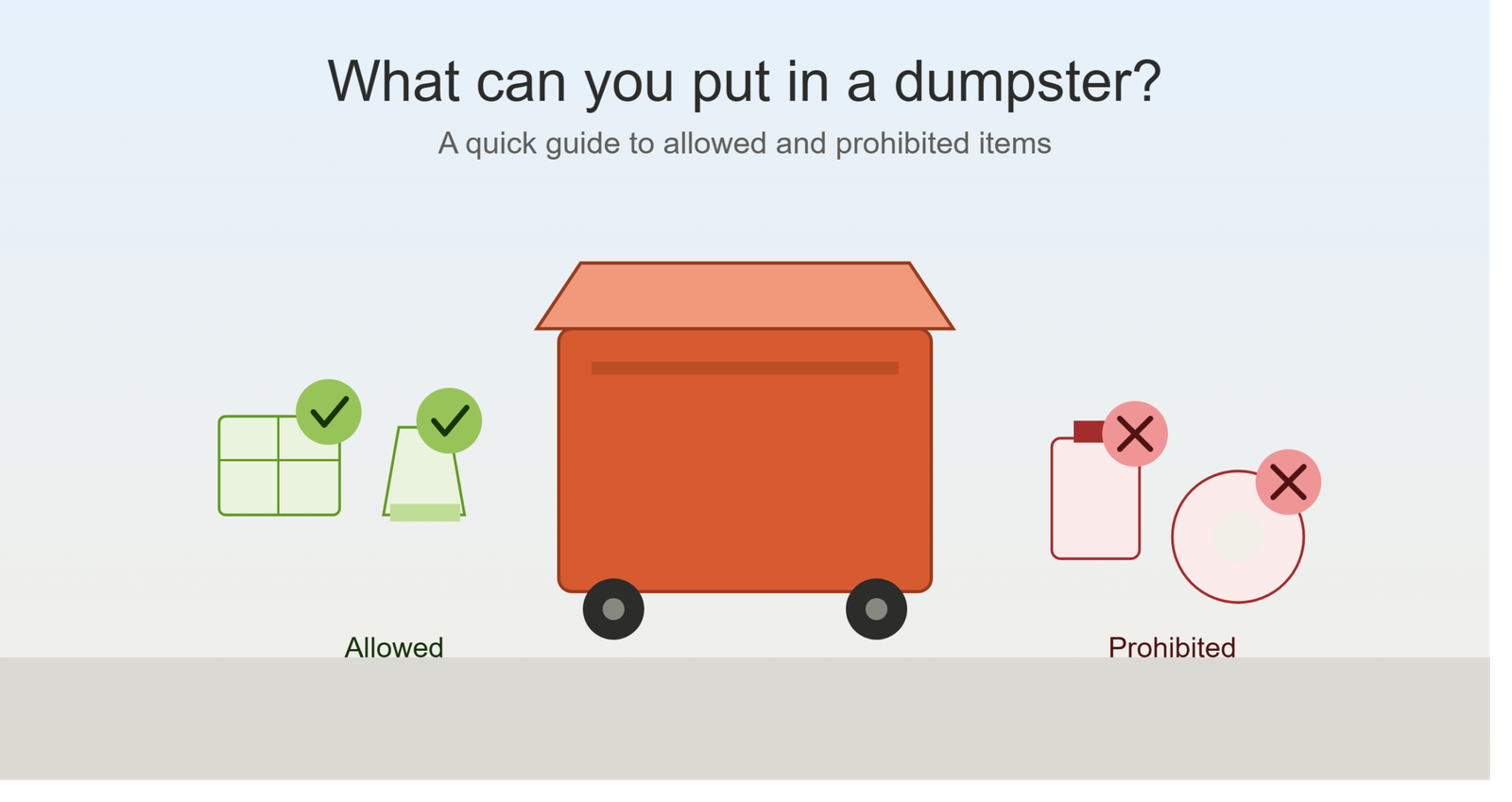
You rented a dumpster, and now the real question hits: what actually goes in it? Most stuff you’re tossing is fine. A handful of items aren’t, and the reasons come down to safety, the environment, and what your local landfill will even accept.
Here’s the full breakdown—what’s allowed, what’s not, and how to avoid a rejected load or a surprise fee.
What Can You Put in a Dumpster?
The short answer: almost everything that isn’t hazardous, flammable, or toxic. Household junk, remodeling debris, and yard clippings—all of it usually goes straight in.
Household Items You Can Put in a Dumpster
Old clothes, boxes you’ll never unpack, broken toys, worn-out rugs, decor that’s seen better days—toss it all. Cleaning out a garage or an attic that’s turned into a storage graveyard? A dumpster handles it in one trip.
Construction and Remodeling Debris
This is exactly what dumpsters are built for. Drywall, flooring, roofing shingles, wood scraps, and old cabinets—all fair game. Small amounts of concrete and brick usually pass too, though if you’re demoing a patio, you might need a dedicated heavy debris dumpster since concrete adds weight fast.
Yard and Outdoor Waste
Branches, leaves, grass clippings, and smaller stumps typically go in without a problem. Some companies cap how much yard waste they’ll take, and a big stump might cost extra. Worth a quick call to your provider before you assume.
Furniture and Large Household Items
Couches, dressers, bed frames, and mattresses—generally accepted. If you can break a piece down before it goes in, do it. A disassembled bed frame takes up half the room of a whole one.
What Cannot Go in a Dumpster?
A few materials are off the table entirely because they’re dangerous, they’re flammable, or the landfill simply won’t take them. If the landfill won’t accept it, neither can the dumpster company.
Hazardous Materials
Paint, solvents, pesticides, and most household chemicals fall here. So do herbicides, fertilizers, and heavy-duty cleaning products. These need a hazardous waste facility, not a roll-off.
Flammable and Combustible Materials
Gasoline, motor oil, antifreeze, and diesel fuel—none of it belongs in a dumpster. These liquids catch fire or seep into the ground. Aerosol cans are banned too, unless they’re completely empty.
Batteries and Certain Electronics
Rechargeable batteries and most electronics—old TVs, laptops, printers—can’t go in. They’re loaded with lead, mercury, and other metals that need specialized recycling, not a landfill.
Medical and Biohazardous Waste
Needles, medications, anything biohazardous—never allowed, full stop. These put waste workers at risk and require proper medical disposal channels.
Asbestos and Other Regulated Materials
Asbestos removal has to be certified—it’s a serious health hazard on its own. Refrigerants, tires, and propane tanks have their own restrictions too, which we’ll get into below.
Can You Put These Common Items in a Dumpster?
These are the questions that come up over and over once people actually start loading.
Can You Put Furniture in a Dumpster?
Yes. Both wood and upholstered pieces are fine. Break down anything oversized, like a bookshelf or bed frame, so it doesn’t eat all your space.
Can You Put a Mattress in a Dumpster?
Yes, in most places—though some cities tack on an extra fee for mattresses specifically. It’s a quick question to ask before delivery.
Can You Put Appliances in a Dumpster?
Microwaves and toasters, no issue. Stoves, dishwashers, and washing machines? Also fine in most cases. Refrigerators and AC units are the exception—they hold refrigerants that need to be removed by a certified technician first.
Can You Put Electronics in a Dumpster?
Generally, no. Anything with a circuit board—TVs, computers, printers—has to go to an e-waste recycler instead. A few small gadgets without batteries might slide through, but check first rather than guess.
Can You Put Tires in a Dumpster?
Not usually. Tires don’t break down in a landfill and take up more room than they’re worth. Most tire shops will recycle them for a few dollars.
Can You Put Concrete in a Dumpster?
A little bit, sure. But concrete is dense, and it’ll blow past your weight limit before you know it. For anything beyond a small patch job, get a dumpster made for heavy debris.
Can You Put Dirt in a Dumpster?
Small amounts, yes. Dirt is deceptively heavy, so a large pile might need its own container rather than sharing space with everything else.
Can You Put Paint in a Dumpster?
Wet paint counts as hazardous waste, so no. Once it’s fully dried and hardened, it’s usually fine. A lot of hardware stores also take old paint for recycling if you’d rather not wait for it to dry.
Can You Put Cardboard in a Dumpster?
Absolutely—cardboard is about as low-risk as it gets. Just flatten the boxes first. It saves more room than you’d expect.
Can You Put Yard Waste in a Dumpster?
Yes, within reason. Branches, leaves, and grass clippings are typically fine in normal amounts.
What Items Require Special Disposal?
Some things just need a different drop-off point entirely.
Paint and Household Chemicals
Wet paint, solvents, and household chemicals belong at a hazardous waste facility. Many cities run free drop-off days a few times a year—worth checking your local calendar.
Batteries and Electronics
Certified e-waste recyclers handle these properly. A lot of electronics and office supply stores also have free battery bins near the entrance.
Tires and Automotive Waste
Tyre shops recycle old tyres cheaply. Auto parts stores often take used motor oil and antifreeze off your hands too.
Propane Tanks and Gas Cylinders
Propane, oxygen, and other compressed gas tanks need special handling—hardware stores and propane suppliers are usually your best bet for safe disposal.
Refrigerants and Certain Appliances
Fridges and AC units hold refrigerants that damage the ozone layer if they’re released carelessly. A certified appliance recycler should handle the pickup, not a regular hauling service.
Why Are Some Items Prohibited From Dumpsters?
It’s not arbitrary. Each restriction traces back to a real risk.
Environmental Regulations
Hazardous waste can seep into soil and groundwater once it’s sitting in a landfill. Federal and state laws exist specifically to prevent that.
Fire and Safety Risks
Flammable liquids and pressurized containers can ignite or explode under heat. Keeping them out of dumpsters protects the crew loading and hauling your waste.
Landfill Requirements
Landfills have their own restrictions on what crosses the gate. One prohibited item can get an entire load turned away.
Recycling and Special Disposal Requirements
Electronics, batteries, and similar items often contain materials worth reclaiming. Routing them correctly keeps usable material out of the ground for good.
What Happens If You Put Prohibited Items in a Dumpster?
Loads get inspected once they reach the landfill or transfer station—banned items rarely sneak through.
Additional Disposal or Sorting Fees
Find something prohibited in the mix, and you’re usually looking at extra sorting or disposal charges tacked onto your bill.
Waste Rejection or Removal
Sometimes the whole load gets turned away outright. You might have to pull the offending item out yourself before it’s accepted.
Pickup Delays
A rejected load means a delayed pickup, which means your project stalls—and probably costs you more than it should have.
How to Prepare Your Waste Before Renting a Dumpster
A few minutes of planning save a lot of headaches later.
Sort Your Waste Before Delivery
Pull hazardous items, electronics, and recyclables aside before the dumpster even shows up. It makes loading day go faster and keeps you compliant.
Check Accepted and Prohibited Materials
Rules vary by company. If you’re not sure about something, ask before it goes in—not after.
Estimate Your Waste Volume
Take a rough guess at how much debris you’ll actually generate. It’s the difference between the right size and an overage fee.
Consider dumpster weight limits.
Concrete, dirt, and shingles pile on weight quickly. Cross the limit and you’ll pay for it, sometimes more than you’d expect.
Choose the Right Dumpster Size
Small cleanout, small dumpster. Full renovation: go bigger. Getting the size right the first time saves money and a second delivery.
How to Load a Dumpster Properly
How you load matters almost as much as what you’re loading.
Distribute Heavy Materials Evenly
Put the heavy stuff down first and spread it out. An unbalanced load isn’t safe to haul.
Break Down Large Items
Flatten what you can. Disassemble what you can’t flatten. Every bit of extra space counts.
Keep Waste Below the Fill Line
There’s a fill line for a reason—go past it and the load isn’t safe to transport, which usually means rejection at pickup.
Avoid Overloading the Dumpster
Overloading isn’t just a safety issue; it’s usually an expensive one too. Stick to the weight limit and the fill line, and pickup goes smoothly.
Frequently Asked Questions About Dumpster Items
What can you put in a dumpster?
Household junk, construction debris, furniture, yard waste—basically anything that isn’t hazardous, flammable, or toxic.
What cannot go in a dumpster?
Hazardous waste, flammable liquids, batteries, most electronics, medical waste, and asbestos.
Can you put furniture in a dumpster?
Yes—just break down anything oversized first.
Can you put a mattress in a dumpster?
Yes, though some cities charge an extra fee for it.
Can you put appliances in a dumpster?
Most are fine. Refrigerators and AC units need refrigerant removal first.
Can you put electronics in a dumpster?
Usually not—anything with a circuit board needs an e-waste recycler.
Can you put concrete in a dumpster?
Small amounts, sure. Larger loads need a dedicated heavy debris dumpster.
Can you put dirt in a dumpster?
In small amounts, yes. It gets heavy fast.
Can you put tires in a dumpster?
Usually not—a tire shop is the better route.
Can you put paint in a dumpster?
Wet paint, no. Dried and hardened paint, typically fine.
Ready to Rent a Dumpster the Right Way?
You know what goes in and what stays out—that’s most of the battle. Whether it’s a garage cleanout, a kitchen remodel, or a full job site, getting the right size and knowing the rules up front keeps things moving.
Reach out to Amen Dumpster for a fast quote and help picking the right container for your project.