
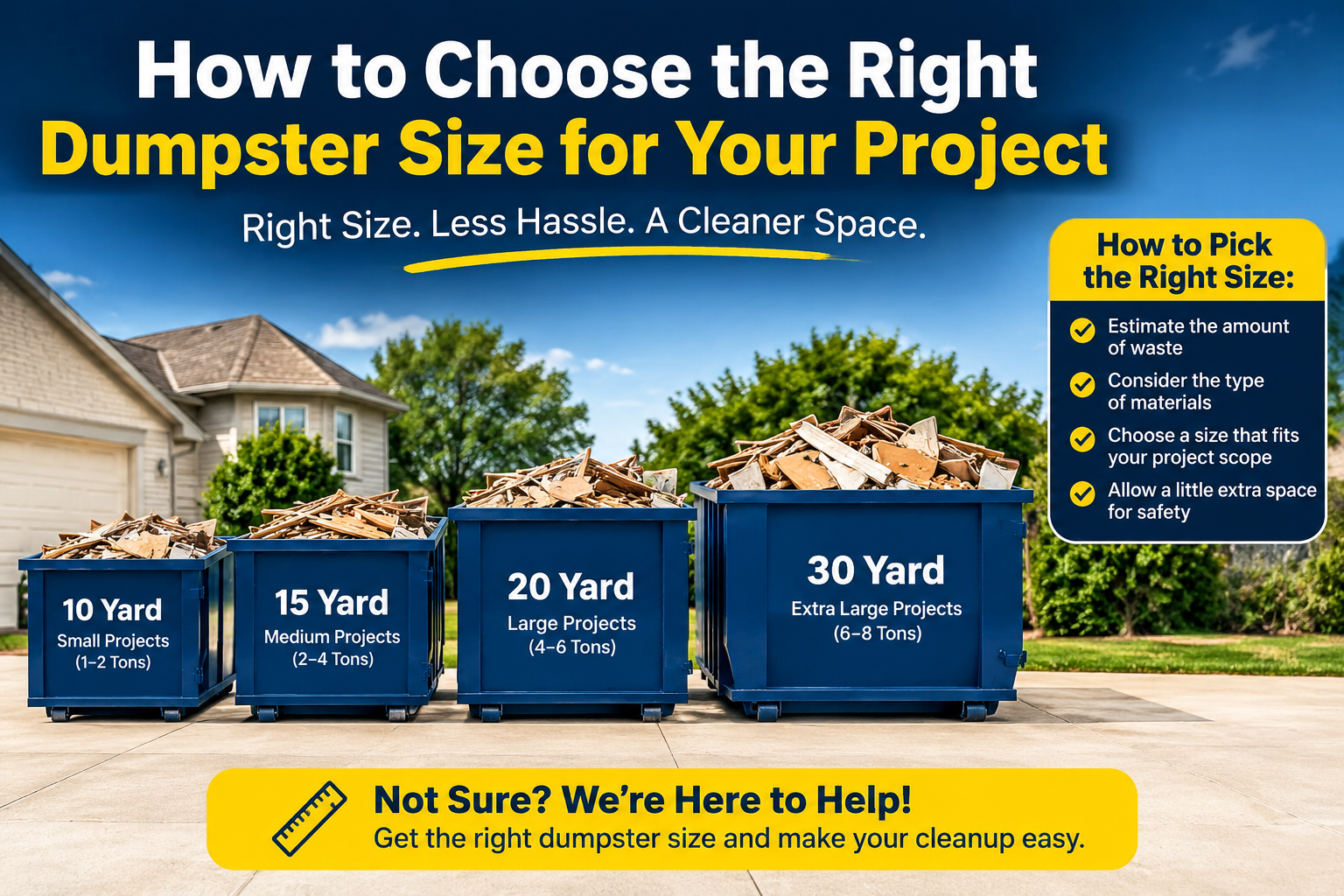
Six things decide what dumpster size you need: your project type, how much debris you’ll create, how heavy that debris is, the dumpster’s dimensions, how much room you have to place it, and how long you’ll need it. Nail these down, and you’ll skip the two mistakes people run into most—paying for space they never use or filling up the dumpster before the job’s even done.
Below, we’ll walk through each of those factors, break down what Amen Dumpster actually offers, and give you a simple way to land on the right size without overthinking it.
What Size Dumpster Do I need?
If you’re not sure where to start, a 15-yard dumpster is a safe bet for most homeowners. It handles a garage or basement cleanout, a single-room remodel, or a mixed load of furniture and junk without much trouble.
Got a smaller job, or one involving heavy stuff like concrete or dirt? A 10-yarder is probably plenty. Planning a bigger renovation, a whole-home cleanout, or an ongoing construction project? Go with the 20-yard one—you’ll want the extra room.
Two things matter more than anything else here: how much space your debris takes up, and how much it weighs. Space tells you whether it’ll fit. Weight tells you whether you’ll get hit with extra charges. We’ll help you figure out both.
Understanding Dumpster Sizes
Amen Dumpster offers three roll-off sizes—10-yard, 15-yard, and 20-yard—each priced with a set amount of weight built in. Go over that, and extra weight gets billed at a flat per-ton rate. Here’s how they break down.
What Is a 10-Yard Dumpster Best For?
At 12 feet long, 8 feet wide, and 4 feet high, the 10-yard is Amen Dumpster’s smallest option, with 1.5 tons of weight included. Its compact size and low height make it a good match for:
- Small home or garage cleanouts
- Clearing out a single room
- Yard waste from a modest landscaping job
- Heavy, dense debris — concrete, brick, dirt — where the weight limit matters more than the open space
Because it’s small, it’s also the easiest to fit into a tight driveway.
What Is a 15-Yard Dumpster Best For?
The 15-yard measures 14 feet long, 8 feet wide, and 5 feet high, with 2 tons included. It’s the workhorse of the lineup—the size most residential jobs end up needing.
- Garage, basement, or attic cleanouts
- A bathroom or small kitchen remodel
- A mixed load of furniture, boxes, and general household junk
- Moderate yard cleanup that includes some bulkier debris
When you’re torn between two sizes, this is usually the one to pick.
What Is a 20-Yard Dumpster Best For?
At 14 feet long, 8 feet wide, and 6 feet high, the 20-yard is Amen Dumpster’s largest size, holding 2.5 tons of weight. It’s built for:
- Larger remodels that touch more than one room
- Active construction debris
- Whole-home or estate cleanouts
- Any project where you’re combining bulky items with a lot of volume
The extra capacity comes from height rather than a bigger footprint, which helps if your driveway space is limited.
Dumpster Size Comparison
| Dumpster Size | Weight Included | Dimensions (L x W x H) | Best For | Typical Project Scale | Important Considerations |
| 10-Yard | 1.5 tons | 12′ x 8′ x 4′ | Small cleanouts, heavy or dense debris | Single room, small garage | Fills up fast with heavy material like concrete or dirt |
| 15-Yard | 2 tons | 14′ x 8′ x 5′ | Cleanouts, single-room remodels, mixed junk | Garage, basement, attic, small remodel | The most flexible option for typical households |
| 20-Yard | 2.5 tons | 14′ x 8′ x 6′ | Renovations, construction debris, estate cleanouts | Multi-room remodel, active job site | Takes up more space — confirm clearance before delivery |
Every size includes a 7-day rental, and extra weight beyond your included allowance runs $120 per additional ton.
How to Choose the Right Dumpster Size
There’s no shortcut here, but there is a logical order. Work through these six factors, and each one narrows things down further.
Consider Your Project Type
Start with the job itself. A cleanout, a remodel, and a construction project each leave behind different debris in different amounts—a single-room remodel and a full-house renovation might both count as “renovation waste,” but they rarely need the same dumpster.
Estimate Your Debris Volume
Think in truckloads or count rooms if it’s a cleanout. A one-room job is usually a small fraction of what a whole house produces. If you genuinely can’t tell, size up a little rather than risk running short.
Consider the weight of your materials.
Space and weight are two different things. A dumpster can look barely half-full and still hit its weight cap if you’re loading something dense—concrete, tile, brick, or dirt. If your project involves any of that, weight is probably going to decide your size before volume does.
Check the dumpster dimensions.
Line the dumpster’s length, width, and height up against what you’re actually loading. Bulky pieces—a couch, a mattress—need real floor space and height to load safely, not just a number on a spec sheet.
Consider Dumpster Placement
Before you book, walk the driveway or job site and make sure there’s a clear, flat spot for delivery and pickup. Watch for low branches, wires, or narrow gates that could get in the way.
Check Rental and Disposal Requirements
Know your rental window, what materials are accepted, and whether you’ll need a permit if the dumpster sits on the street instead of your driveway. Amen Dumpster rental runs for 7 days, and a handful of items—tires, batteries, paint, solvents, propane tanks, and hazardous waste—aren’t allowed in any size dumpster.
What Dumpster Size Do You Need for Common Projects?
Home Cleanouts
Clearing out an entire home usually means a mix of furniture, boxes, and general clutter—that typically calls for a 15-yard or 20-yard dumpster, depending on how big the house is and how much you’re getting rid of.
Garage, Basement and Attic Cleanouts
These tend to produce a moderate, mixed load: old furniture, boxes, tools, whatever’s been piling up. A 15-yard usually covers it, though a single lightly packed space might only need a 10-yard.
Home Remodeling
A single-room job, like a bathroom, often fits comfortably in a 15-yard. Once you’re touching multiple rooms, the debris adds up fast enough that a 20-yarder makes more sense.
Construction Projects
Drywall, wood, and similar construction debris are fine to toss in, but an active job site fills a dumpster quicker than most people expect. Go with a 20-yard if you want to avoid swapping containers mid-project.
Yard Cleanup
A moderate landscaping job usually fits in a 10-yard or 15-yard, depending on how much debris you’re generating and whether tree limbs or other bulky items are involved.
Furniture and Appliance Removal
Even a handful of large items eat up space fast. A 10-yard handles a few pieces; if you’re clearing several rooms’ worth, a 15-yard gives you more breathing room.
Estate Cleanouts
These often mean furniture, appliances, and years of belongings all at once. A 20-yard is usually enough to clear a full property in one go, without needing a second pickup.
What Happens If You Choose a Dumpster That’s Too Small?
Going too small causes more than a minor headache:
- Overflow: Debris stacked above the fill line isn’t safe to haul, and it may not get picked up until it’s leveled off.
- A second pickup. You’ll need to schedule another swap or delivery, which eats into your timeline.
- Extra cost. Between a second dumpster, another trip, or overage fees, going too small often ends up costing more than sizing up would have in the first place.
- Delays. Waiting on another delivery slows down cleanouts, remodels, and job sites alike.
- Loading problems. An overfilled dumpster is harder — and less safe — to load, especially with anything heavy or bulky.
If you’re genuinely stuck between two sizes, go bigger. It’s the lower-risk call almost every time.
How to Estimate Your Dumpster Needs
Here’s a simple way to work through it:
- Project — What’s the job? Cleanout, remodel, or construction.
- Materials — What are you throwing out, and is any of it heavy or bulky?
- Volume — Roughly how much space will it all take up?
- Weight — Is it light and bulky, or dense and heavy? This matters as much as volume.
- Space — Do you have room to place and access the dumpster?
- Size — Match your answers against the comparison table above.
- Confirmation—Call or book with Amen Dumpster to lock it in before delivery.
Common Dumpster Size Mistakes to Avoid
- Choosing based on price alone. The cheapest size upfront can end up costing more if you need a second pickup or run into overage fees.
- Underestimating debris. Most people guess low on how much a cleanout or remodel actually produces.
- Ignoring material weight. Dense debris like concrete or tile can hit the weight limit long before the dumpster looks full.
- Forgetting about bulky items. A couch or an appliance takes up more real space than its size suggests.
- Not checking placement space. The right size on paper doesn’t help if it won’t fit your driveway or job site.
- Overloading it. Stacking debris above the fill line is a safety issue and can delay pickup.
- Assuming all dumpsters are the same. Dimensions, weight limits, and pricing vary between sizes and providers — check the specifics before you book.
Dumpster Rental in Maryland, Northern Virginia & Washington, DC
Amen Dumpster delivers roll-off dumpsters across Maryland, Northern Virginia, and Washington, DC, with same-day scheduling available across most of the service area. Whether you’re clearing out a rowhouse in DC, renovating in Montgomery County, or managing debris on a job site in Northern Virginia, the same factors apply — project type, debris volume, weight, and how much space you’ve got to work with.
Not sure which size fits your property? Contact Amen Dumpster and walk the team through your project. They’ll help you land on the right fit before delivery.
Frequently Asked Questions
What size dumpster do I need?
It comes down to your project. A 15-yard covers most cleanouts and single-room remodels, a 10-yard works for smaller or heavier loads, and a 20-yard handles bigger renovations or construction debris.
What size dumpster is best for a home cleanout?
Most full cleanouts fit a 15-yard or 20-yard, depending on the size of the home and how much you’re clearing out.
What size dumpster is best for a renovation?
A single-room renovation usually fits a 15-yard container. Bigger or multi-room jobs generate enough extra debris that a 20-yard one makes more sense.
How much can a 10-yard dumpster hold?
Amen Dumpster’s 10-yard measures 12′ x 8′ x 4′ and includes 1.5 tons of weight.
How much can a 15-yard dumpster hold?
Amen Dumpster’s 15-yard measures 14′ x 8′ x 5′ and includes 2 tons of weight.
How much can a 20-yard dumpster hold?
Amen Dumpster’s 20-yard measures 14′ x 8′ x 6′ and includes 2.5 tons of weight.
Does dumpster size depend on weight?
Yes. Volume tells you whether your debris fits—weight tells you whether you’ll pay extra. Dense material like concrete or tile can max out the weight limit well before the dumpster looks full.
How much space does a dumpster need?
You’ll need a clear, flat spot for delivery and pickup, with enough clearance overhead and to the sides for the truck to maneuver. If you’re not sure your space works, confirm with Amen Dumpster before delivery.
What happens if I rent a dumpster that is too small?
You risk overflow, a second pickup, extra costs, and delays. If you’re stuck between two sizes, sizing up is usually the safer call.
Choose the Right Dumpster for Your Project
It comes down to six things: project type, debris volume, material weight, dimensions, placement space, and rental requirements. Work through them in order, and you’ll land on a size that actually fits the job—without overpaying or running short.
Still not sure? Contact Amen Dumpster and tell the team what you’re working on, what you’re getting rid of, and roughly how much of it there is. They’ll help you land on the right size before you book.